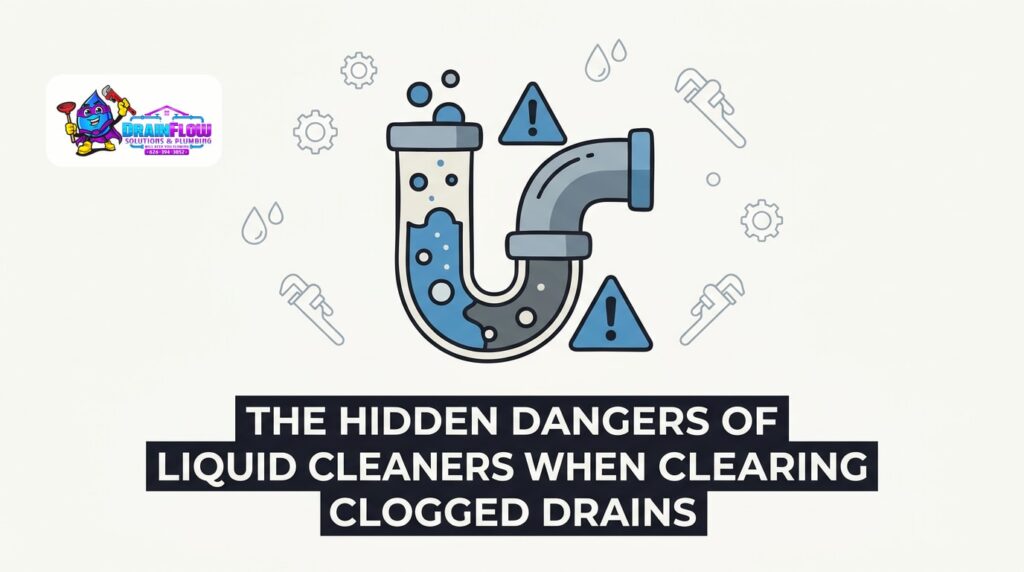
The Temptation of the Quick Fix: Why Clearing a Clogged Drain Requires Care
Your sink is backing up, dirty water is pooling around the stopper, and you realize that clearing a clogged drain is now at the top of your to-do list. The immediate frustration of a sudden shower or kitchen sink backup drives many homeowners straight to the hardware store. Lined up on the shelves are brightly colored bottles of liquid drain cleaners, promising to dissolve hair, grease, and soap scum in minutes. It looks like the perfect, inexpensive quick fix.
However, resorting to harsh, heat-generating chemical liquid drain cleaners to clear a stubborn blockage is a decision that often causes severe, irreversible damage to your plumbing system. Understanding when a clog requires mechanical clearing rather than simply pouring a chemical down the pipe is the most important decision you can make for your home’s infrastructure. These heavily marketed products rely on intense exothermic chemical heat reactions to burn through obstructions. While they might occasionally create a small pathway through a clog, they rarely remove the entire blockage.
Worse, the extreme heat and corrosive nature of these chemicals attack the pipes themselves. Instead of a fast solution, homeowners frequently find themselves facing major pipe replacements and hazardous cleanups. Before you unscrew the cap on a bottle of liquid cleaner, it is critical to understand the safe, mechanical alternatives and when it is time to rely on sewer and drain services to protect your home.
What Actually Happens When You Pour Liquid Cleaners Down the Drain
The problem: You have a dense blockage of hair, grease, and soap scum sitting deep inside your plumbing lines. Water cannot pass, and the pipe is completely sealed off.
The cause of the damage: When you pour a commercial liquid drain cleaner into standing water, a violent chemical reaction begins immediately. Most store-bought drain cleaners rely on highly caustic ingredients like sodium hydroxide (lye) or powerful acids like sulfuric acid. These chemicals do not simply wash away the clog; they attempt to burn through it by generating intense heat. This process is known as an exothermic chemical heat reaction. Inside the confined space of your plumbing pipe, the temperature of the standing water can rapidly approach the boiling point.
Modern residential plumbing heavily utilizes PVC (polyvinyl chloride) piping. While PVC is durable and rust-proof, it is not designed to withstand boiling temperatures or highly concentrated corrosive acids. The extreme heat generated by the chemical reaction can easily warp, melt, or permanently deform PVC pipes, causing joints to fail and water to leak behind your walls or under your floors.
Furthermore, mixing different store-bought chemicals—even accidentally, by using one brand on Monday and a different brand on Wednesday when the clog remains—can create highly toxic, lethal gases. The chemical fumes can back up through the drain and into your living space, posing a severe health hazard to your family and pets.
The solution: Bypassing chemical reactions entirely and relying on mechanical professional drain cleaning ensures the blockage is physically removed without subjecting your pipes to melting temperatures or toxic fumes.

The Hidden Threat to Older Plumbing Systems and Septic Tanks
If you live in an older home, the risks associated with liquid drain cleaners multiply significantly. Homes built before the 1980s often rely on cast iron or galvanized steel plumbing lines. Over decades of use, these metal pipes naturally develop wear, but they generally maintain a protective internal layer of rust and scale that keeps them functional.
Repeated use of acidic liquid cleaners aggressively eats away at this protective coating. As the acid sits inside a slow-moving pipe, it continuously attacks the metal. This chemical corrosion thins the pipe walls, eventually leading to pinhole leaks, structural failure, and collapsed sewer lines. What started as a minor inconvenience in the bathroom sink can quickly escalate into raw sewage leaking into your crawlspace or basement.
For homes on alternative waste systems, the danger extends beyond the pipes. Septic tanks rely on a delicate ecosystem of beneficial bacteria to constantly break down solid waste. When you pour a bottle of bleach, lye, or sulfuric acid down the drain, those chemicals flow directly into the septic tank, instantly killing the bacterial colony. Without these bacteria, the tank fills with undigested solid waste, leading to systemic failure, foul yard odors, and costly environmental cleanups.
When you compare the perceived savings of a cheap chemical fix against the long-term costs of replacing corroded cast iron pipes or pumping a failed septic field, the liquid cleaner is never worth the risk.
The Role of Hard Water in Stubborn Blockages
Chemical cleaners also fail to address one of the most common underlying causes of chronic drain issues: hard water. Hard water contains high concentrations of dissolved minerals, primarily calcium and magnesium. In regions like the San Gabriel Valley, hard water is incredibly common, meaning local plumbing systems are constantly exposed to these heavy mineral loads.
As hard water flows through your pipes day after day, it leaves behind microscopic mineral deposits. Over months and years, these deposits build up into a hard, chalky layer of scale that coats the interior walls of your plumbing. This calcification acts like plaque in an artery, steadily narrowing the interior diameter of the pipe. A drain line that was originally two inches wide may be reduced to less than an inch of usable space.
This rough, rocky scale creates the perfect trap for debris. Hair, soap scum, food particles, and grease easily snag on the calcified mineral deposits, anchoring themselves in place and creating immovable blockages. Liquid chemical cleaners cannot dissolve hard water scale. Even if the acid manages to burn a small hole through the trapped hair, the rocky mineral buildup remains untouched. Because the root cause of the clog is still attached to the pipe walls, the blockage will inevitably return in a matter of weeks.
Safe Ways to Clear a Clogged Drain Without Chemicals
Before you reach for the phone or a bottle of chemicals, there are several safe, mechanical methods you can try at home. These approaches rely on pressure and physical retrieval rather than destructive chemical reactions.
- Use the right plunger: A standard cup plunger works best for flat surfaces like sinks and tubs, while a flange plunger is designed for toilets. Ensure there is enough standing water to cover the bell of the plunger, create a tight seal, and use firm, rhythmic thrusts to force the blockage loose through water pressure.
- Flush with hot water: If your pipes are metal (do not use boiling water on PVC), a kettle of boiling water poured directly down the drain can help melt away minor grease and soap scum buildups.
- Create a natural reaction: Pour one cup of baking soda down the drain, followed immediately by one cup of white vinegar. Plug the drain with a rag to force the expanding carbon dioxide gas downward against the clog. After 15 minutes, flush the line with hot water.
- Clear the P-trap: Place a bucket under the curved pipe beneath your sink. Loosen the slip nuts by hand, remove the trap, and manually clear out the trapped hair and debris before reattaching it.
- Retrieve surface clogs: Use a basic plastic drain snake or a bent wire hanger to reach down into the first few inches of a shower or sink drain to manually pull out hair clumps.
If these basic steps do not restore full water flow, it is a clear sign that the obstruction is located deeper in the system. For more detailed guidance on tackling minor blockages safely, exploring simple ways to fix a clogged drain can provide additional mechanical strategies that won’t harm your plumbing.
Enzymatic Cleaners: A Safer Biological Alternative
If you prefer to use a liquid product to maintain your drains, enzymatic cleaners are a vastly superior and safer alternative to harsh chemicals. Instead of using acid or lye to burn through blockages, biological drain cleaners use natural, beneficial bacteria and enzymes to break down organic waste.
When poured into a drain, these enzymes target specific organic materials. Lipases break down fats and greases, proteases target protein-based waste, and amylases digest starches. The bacteria physically digest the organic matter, turning it into harmless water and carbon dioxide that easily flows away.
Because this is a natural biological process, enzymatic cleaners do not generate any heat. They are completely safe for all types of plumbing, including PVC, older cast iron, and galvanized steel. Furthermore, because they introduce beneficial bacteria into the system, they are actually helpful for maintaining a healthy septic tank ecosystem.
The trade-off is time. Enzymatic cleaners do not work instantly. They are best positioned as a routine maintenance tool rather than a fast-acting emergency fix. Pouring an enzyme treatment down the drain once a month before bed allows the bacteria to safely digest minor organic buildup overnight, preventing severe clogs from forming in the first place.
Recognizing When a Clog Requires Professional Tools
The problem: You have tried plunging, baking soda, and manual retrieval, but the water still refuses to drain. The clog is stubborn, deep, and completely blocking the line.
The cause of further damage: Continuing to force a blockage using improper DIY tools can make the situation worse. Aggressively pushing a standard hand auger into a pipe can accidentally compact the debris, pushing the clog deeper into the main sewer line where it becomes much harder to reach. If you notice signs of a severe blockage—such as multiple fixtures backing up simultaneously, foul sewage odors in the home, or water bubbling up in the shower when you flush the toilet—the obstruction is far beyond the reach of household tools.
The solution: Professional plumbers utilize specialized mechanical equipment to safely clear the line. One of the most common and effective methods is professional drain snaking. A motorized auger is carefully fed through the pipe, where its specialized cutting head physically breaks apart dense obstructions like tree roots or compacted debris without scraping or damaging the pipe walls.
The Benefits of Advanced Water Jetting
For the most severe blockages, particularly those caused by years of hard water scale and heavy grease, high-pressure water jetting is the ultimate solution. This process uses a specialized nozzle that blasts water at incredibly high pressures in a 360-degree radius inside the pipe.
- Complete clearing: Unlike a snake that simply punches a hole through a clog, pressurized water clears the entire interior diameter of the pipe, restoring it to its original capacity.
- Scale removal: It is the best and safest method for scouring away calcified mineral buildup and deep-set grease that chemicals cannot touch.
Relying on the professional expertise from DrainFlow Solutions & Plumbing ensures that stubborn clogs are safely cleared. Professional diagnostics can also identify underlying plumbing issues—like a sagging pipe or intruding tree roots—without relying on harsh, pipe-damaging chemicals that only mask the real problem.
Frequently Asked Questions About Safely Unclogging Drains
Why do plumbers say not to use Drano or similar chemical cleaners?
Plumbers advise against commercial chemical cleaners because they rely on exothermic reactions that generate extreme heat inside your pipes. This heat can warp or melt modern PVC plumbing and severely damage the glue holding the pipe joints together. Additionally, if the chemical fails to clear the clog, it leaves a pool of highly toxic, corrosive acid sitting in the pipe, creating a severe burn hazard for the plumber who eventually has to open the line to fix it.
What is the best home remedy to unclog a drain?
The most effective and safe home remedy is a combination of mechanical plunging and a baking soda and vinegar flush. Start by pouring one cup of baking soda followed by one cup of white vinegar down the drain, plugging it to force the expanding gas downward against the clog. After 15 minutes, flush the drain with hot water, and follow up with a standard cup plunger to physically force the loosened debris through the pipe.
Can chemical drain cleaners ruin my pipes?
Yes, chemical drain cleaners can cause permanent, irreversible damage to your plumbing infrastructure. Acidic formulas aggressively eat away at the protective inner coatings of older cast iron and galvanized steel pipes, leading to structural thinning and pinhole leaks. For newer homes, the intense heat generated by caustic chemicals can permanently deform and melt PVC piping.
How do you unclog a drain when nothing works?
When plunging, natural remedies, and manual retrieval fail to restore water flow, you must stop DIY efforts to avoid pushing the clog deeper into the main sewer line. At this stage, the blockage requires professional mechanical intervention. A licensed plumber will use a motorized drain snake or a high-pressure hydro-jetter to physically break apart and wash away the obstruction without harming the pipes.
What dissolves hair in a drain naturally?
Enzymatic biological drain cleaners are the best natural solution for dissolving hair and organic waste. These cleaners contain natural bacteria and enzymes (specifically proteases) that safely digest the proteins in hair over time. While baking soda and vinegar can help loosen the soap scum that binds hair together, enzymes actually consume the organic material without generating heat or damaging the plumbing.
How often should I have my drains professionally cleaned?
Most plumbing experts recommend scheduling professional drain cleaning every one to two years as a preventative maintenance measure. Homes with older cast iron plumbing, frequent hard water scale buildup, or large trees near the main sewer line may benefit from annual cleanings to prevent minor debris accumulation from turning into a severe, costly backup.
Protect Your Plumbing with Expert Solutions
Protecting your home’s plumbing infrastructure means making smart choices when faced with a sudden backup. Avoiding destructive liquid chemicals is the first step in preserving the lifespan of your pipes. While the temptation of a cheap fix is strong, the exothermic chemical heat reactions caused by these products simply create more danger, expense, and damage in the long run.
Always remember that mechanical and biological methods—like plunging, natural enzyme treatments, and manual retrieval—are the safest initial approaches for clearing clogged drain lines. When those safe methods fall short, do not risk your pipes. Encourage long-term pipe health and gain total peace of mind by scheduling professional hydro jetting services. By choosing objective, safe, and mechanical clearing methods, you ensure your plumbing system remains healthy, functional, and damage-free for years to come.