The Hidden Defense System Inside Your Water Tank
You walk into your garage or basement, only to find a spreading puddle of rusty water pooling around the base of your utility closet. At DrainFlow Solutions & Plumbing, our team frequently responds to this exact homeowner’s worst nightmare, often signaling that a critical, hidden component has quietly failed inside your standard 40- or 50-gallon unit. That unseen component is the anode rod, a vital line of defense that prevents standard glass-lined tank water heaters from rusting out from the inside. While water and steel are a naturally destructive combination, this single, slender piece of metal is designed to take the damage so your tank doesn’t have to.
Understanding how this component works and when it requires professional attention is the difference between a simple maintenance visit and a catastrophic flood. If you are looking to protect your home’s infrastructure, investing in professional plumbing services for routine inspections is the most effective way to ensure your system remains secure.
How a Sacrificial Anode Rod Prevents Catastrophic Rust
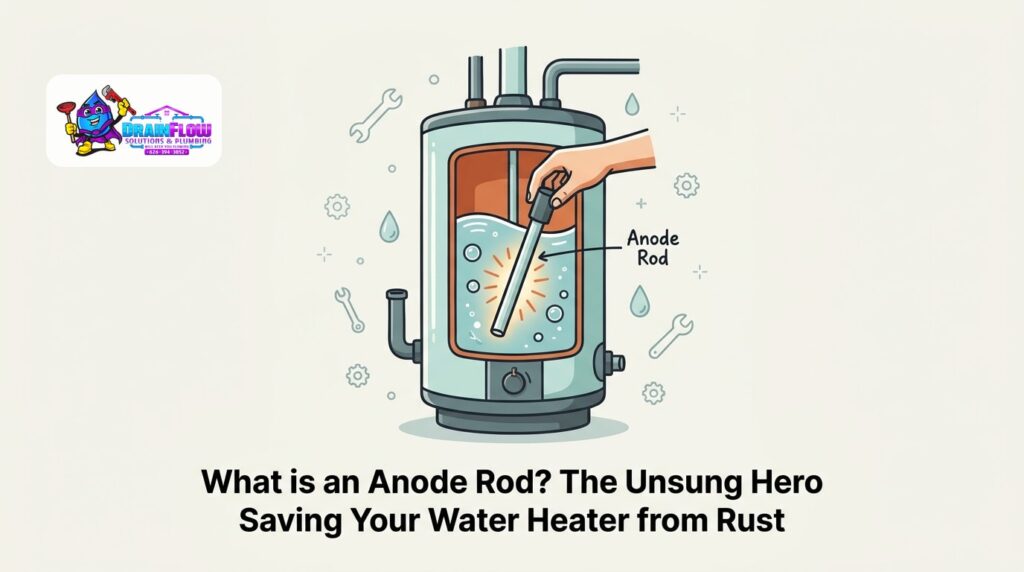
To understand why standard glass-lined tank water heaters do not rust away within their first year of use, you have to look at the science of a “sacrificial” metal. The anode rod is intentionally designed to be destroyed. Suspended inside the water tank, this rod acts as a powerful magnet for corrosive elements. Through a process called electrolysis, especially when water temperatures reach the typical 120°F to 140°F setting, the more reactive metal of the rod sacrifices its own electrons to protect the less reactive steel of the tank walls. As long as the rod is present and functioning, the tank remains safe.
However, this protection comes with a definitive expiration date. The rod slowly dissolves over time as it does its job. Once the sacrificial metal is completely depleted, the corrosive elements in the water immediately turn their attention to the steel tank lining. Without a protective rod, the tank will inevitably begin to rust, weaken, and eventually rupture. Catching this depletion before the tank is compromised is why timely water heater repair and maintenance are absolutely critical for property owners.
The Threat of Galvanic Corrosion
Galvanic corrosion occurs when two different metals are submerged in an electrolyte—in this case, the heated tap water inside your tank. Water, heat, and metal create the perfect storm for rust. The anode rod intercepts this chemical reaction. By offering itself up to the corrosive elements, the rod sacrifices its own structural integrity so the steel tank can survive. When the rod is fully consumed, the galvanic corrosion process attacks the weakest points of the tank, usually the welded seams, leading to irreversible failure.
The Double-Edged Sword: Hard Water and Water Softeners
The Problem: Under normal conditions, an anode rod in standard glass-lined tank water heaters will typically last between three and five years. However, local water quality plays a massive role in how quickly that metal breaks down. In regions like the San Gabriel Valley—including Pasadena and Arcadia—the water is notoriously hard, often exceeding 15 grains per gallon of dissolved minerals like calcium and magnesium. This highly mineralized water increases electrical conductivity, forcing the anode rod to work overtime and accelerating its depletion significantly.
The Cause: To combat this hard water, many homeowners install a water softener system. While softening the water is excellent for protecting your home’s pipes, fixtures, and appliances from scale buildup, it creates a unique challenge for the water heater. Water softeners use a sodium exchange process, replacing hard minerals with sodium ions. This sodium-rich water is highly conductive, which speeds up the galvanic corrosion process. The irony is that the very system protecting your plumbing actively accelerates the decay of your anode rod.
The Solution: In our years of servicing local neighborhoods, we’ve found that homes utilizing softening equipment must be incredibly proactive. In these environments, an anode rod can be completely consumed in as little as one to three years. Homeowners should schedule professional inspections much more frequently to ensure the rod is replaced before the corrosive focus shifts to the steel tank lining.
Magnesium, Aluminum, or Zinc: Which Metal is Right for Your Tank?
Not all anode rods are created equal. Depending on your home’s specific water chemistry and the issues you are experiencing, our plumbers will select a specific metal—typically equipped with a standard 3/4-inch hex head—to optimize the lifespan of standard glass-lined tank water heaters. Choosing the incorrect material can lead to persistent water quality issues, foul odors, or inadequate protection for the steel tank.
| Anode Rod Material | Best Use Case | Pros & Cons |
|---|---|---|
| Magnesium | Standard municipal water setups without heavy softening. | Provides the highest level of protection for the tank, but depletes the fastest, especially in softened water. |
| Aluminum | Homes with exceptionally hard water or heavy softening systems. | Lasts longer in highly conductive water and withstands harsh minerals, but can leave a slight residue at the bottom of the tank. |
| Zinc / Aluminum Alloy | Homes experiencing sulfur bacteria issues (rotten egg smells). | The zinc actively neutralizes sulfur odors while the aluminum protects the tank, making it a specialized problem-solver. |
Understanding these metallurgical differences highlights why professional assessment is necessary. A technician will evaluate the local water supply, the presence of a softening system, and the tank’s history before determining which rod will provide the best defense against premature rust.
Red Flags: Warning Signs of a Depleted Anode Rod
Waiting for standard glass-lined tank water heaters to leak is a dangerous game. By the time water is pooling on the floor, the tank lining is already destroyed, and a full replacement is the only option. Fortunately, a failing anode rod will often produce specific warning signs before catastrophic failure occurs. Recognizing these symptoms early—especially during the colder winter months when standard glass-lined tank water heaters work harder to heat incoming municipal water—allows for a simple part replacement rather than a major plumbing emergency.
- Rusty or discolored hot water: If the hot water coming from your taps has a brownish or reddish tint, but the cold water is clear, it is a late-stage warning sign that the anode rod is gone and the tank itself is actively corroding.
- Decreased hot water output: As the rod decays, it drops sediment to the bottom of the tank, which can insulate the heating elements and reduce the system’s overall efficiency.
- Frequent faucet aerator clogs: Small, gel-like beads or metallic flakes caught in your faucet screens often point to a decaying aluminum or magnesium rod breaking apart in the plumbing lines.
The Rotten Egg Odor
One of the most distinct signs of anode rod trouble is a strong “rotten egg” smell coming exclusively from the hot water taps. This odor is caused by a reaction between sulfates naturally present in the water supply and a failing magnesium anode rod. As the rod breaks down, it creates an environment where harmless sulfur bacteria can thrive, releasing hydrogen sulfide gas. Switching to a zinc-alloy rod is the standard professional solution for neutralizing this specific chemical reaction.
Rumbling and Popping Sounds
As the sacrificial metal dissolves, it doesn’t just disappear; it turns into sediment that settles heavily at the bottom of the tank. This thick layer of sediment traps small pockets of water against the heating element or the burner at the bottom of the tank. When 2 to 3 inches of this trapped sediment flash-boils, it creates a distinct noise. If you are diagnosing the popping sound in your water heater, a heavily depleted anode rod and the resulting sediment buildup are very likely the culprits.

The Hidden Dangers of DIY Anode Rod Replacement
With the rise of online tutorials, many homeowners are tempted to replace the anode rod themselves to save a service call. However, servicing standard glass-lined tank water heaters is inherently risky and should not be treated as a weekend DIY project. The dangers associated with opening a pressurized, scalding-hot water system are severe.
First, anode rods are factory-torqued into the top of the tank—often at over 70 foot-pounds—to prevent leaks under high pressure. Over years of thermal expansion and exposure to hard water minerals, the threads often seize completely. Our technicians routinely get emergency calls to rescue DIY attempts where the threads have seized and DIYers are stuck. Removing a seized rod typically requires professional-grade leverage tools, such as heavy-duty breaker bars or impact wrenches, along with the mechanical knowledge to secure the tank so the plumbing connections are not snapped during the removal process.
Furthermore, improper installation carries significant consequences. If the new rod is not sealed and torqued correctly, the tank will leak under pressure, potentially causing severe water damage to the surrounding area. More importantly, attempting unauthorized repairs on standard glass-lined tank water heaters can completely void the manufacturer’s warranty, leaving you entirely responsible for the cost of a new tank if the system fails prematurely. This is a task that strictly requires a licensed plumbing professional.
Extending Tank Lifespan Through Proactive Maintenance
The core philosophy of responsible plumbing is prevention. For standard glass-lined tank water heaters, an inexpensive part replacement can prevent the premature failure of the entire unit. Regular professional inspections catch anode rod depletion before the steel tank is ever compromised, ensuring the system reaches its maximum intended 10- to 15-year lifespan.
DrainFlow Solutions & Plumbing takes a proactive approach to your home’s infrastructure. The goal is to help homeowners extend the life of their current water heaters through simple, strategic part replacements rather than immediately pushing for full, disruptive system replacements when minor issues arise. By making an anode rod inspection a standard part of your annual plumbing maintenance, you avoid the massive inconvenience and disruption of waking up to a flooded utility room.
When a tank is actively maintained, it runs more efficiently, provides cleaner water, and operates safely. Contrast the simple process of proactive rod replacement with the chaos of an emergency water heater installation after a tank rupture, and the value of routine care becomes undeniable.
Frequently Asked Questions About Water Heater Anode Rods
What happens if you don’t replace an anode rod?
If you do not replace a depleted anode rod, the corrosive elements in the water will begin attacking the steel lining of standard glass-lined tank water heaters. Over time, this galvanic corrosion will eat through the metal walls or welded seams of the tank. Ultimately, this leads to irreversible rust, structural failure, and a ruptured tank that will flood the surrounding area and require a complete system replacement.
How often should a water heater anode rod be replaced?
Under normal municipal water conditions, an anode rod should generally be replaced every three to five years. However, if your home utilizes a water softener or has highly mineralized hard water, the rod’s lifespan can be reduced to just one to three years. Having a professional inspect the rod annually is the best way to determine your exact replacement timeline.
How do I know if my anode rod is bad?
The most common signs of a failing anode rod include a strong rotten egg odor coming from your hot water taps, rusty or discolored hot water, and loud popping or rumbling noises from the tank. If you experience any of these symptoms with standard glass-lined tank water heaters, the rod has likely depleted to the point where sediment is building up or the tank itself is beginning to rust.
Can I replace an anode rod myself?
Replacing an anode rod is highly discouraged for the average homeowner due to severe safety risks involving pressurized, scalding water and seized, factory-torqued threads. Removing the rod usually requires specialized leverage tools, and improper installation can cause dangerous leaks or completely void the manufacturer’s warranty. It is a job best left to licensed plumbing professionals.
Why does my hot water smell like rotten eggs?
A rotten egg smell in your hot water is typically caused by harmless sulfur bacteria thriving in the tank when a magnesium anode rod begins to break down. The reaction between the decaying metal and sulfates in the water produces hydrogen sulfide gas. A professional plumber can resolve this by flushing the tank and replacing the standard rod with a specialized zinc-aluminum alloy rod.
Do tankless water heaters have anode rods?
No, tankless water heaters do not have anode rods because they do not store water in a large steel tank where prolonged galvanic corrosion can occur. Anode rods are specifically designed to protect the storage tanks of standard glass-lined tank water heaters. Tankless systems, which often utilize powerful 199,000 BTU burners, require different maintenance procedures, such as annual descaling, to remove mineral buildup from their heat exchangers.
Protect Your Investment with Expert Water Heater Care
Just because the anode rod is hidden away inside standard glass-lined tank water heaters doesn’t mean it should be ignored. An unseen anode rod shouldn’t mean an unprotected water heater. If it has been more than three years since your last professional inspection—or less, if you run a water softener—it is time for a thorough assessment. We highly recommend scheduling a visit so our team can ensure you have a clear, accessible understanding of your system’s health, keeping your hot water flowing reliably and protecting your home from unexpected tank failures.